An honest look at risk, supervision, lane control and the responsibilities shared by venues and participants.
3 minute readSafety and risk
An honest look at risk, supervision, lane control and the responsibilities shared by venues and participants.
Yes, injury is possible
As with any physical activity involving equipment, injury is possible. That does not mean incidents are inevitable, but it does mean venues and participants should take the risks seriously rather than relying on the novelty of the experience.
Professional supervision, suitable lane design and well-maintained equipment can reduce foreseeable risk. They cannot replace participant attention or a site-specific operating plan.
Where the main hazards can arise
Handling or carrying an axe outside the instructed position.
Crossing the throw line or retrieving equipment at the wrong time.
An axe rebounding after poor contact with the target.
Using damaged equipment or a target face in poor condition.
Slips, trips or collisions in a crowded or badly organised lane area.
Ignoring staff instructions or taking part while impaired.
The venue controls the environment
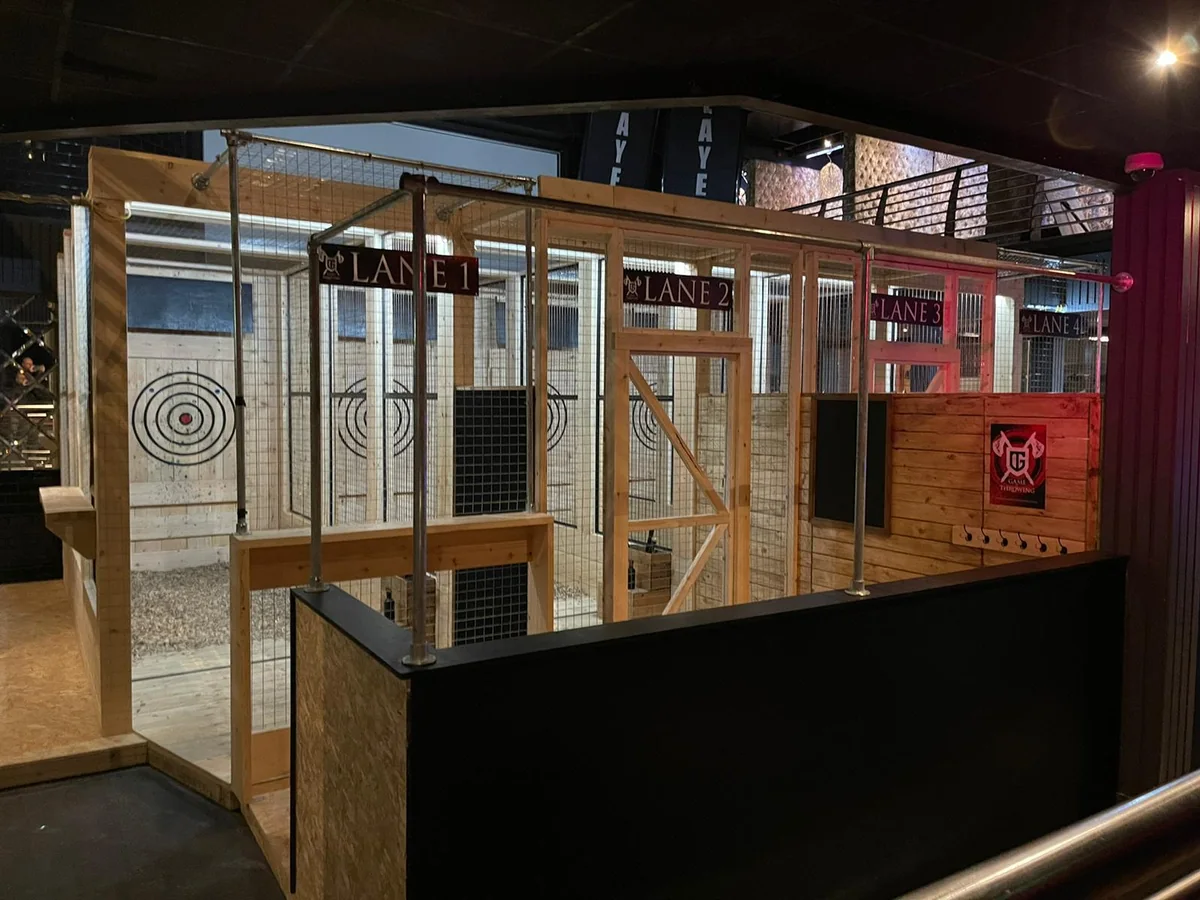
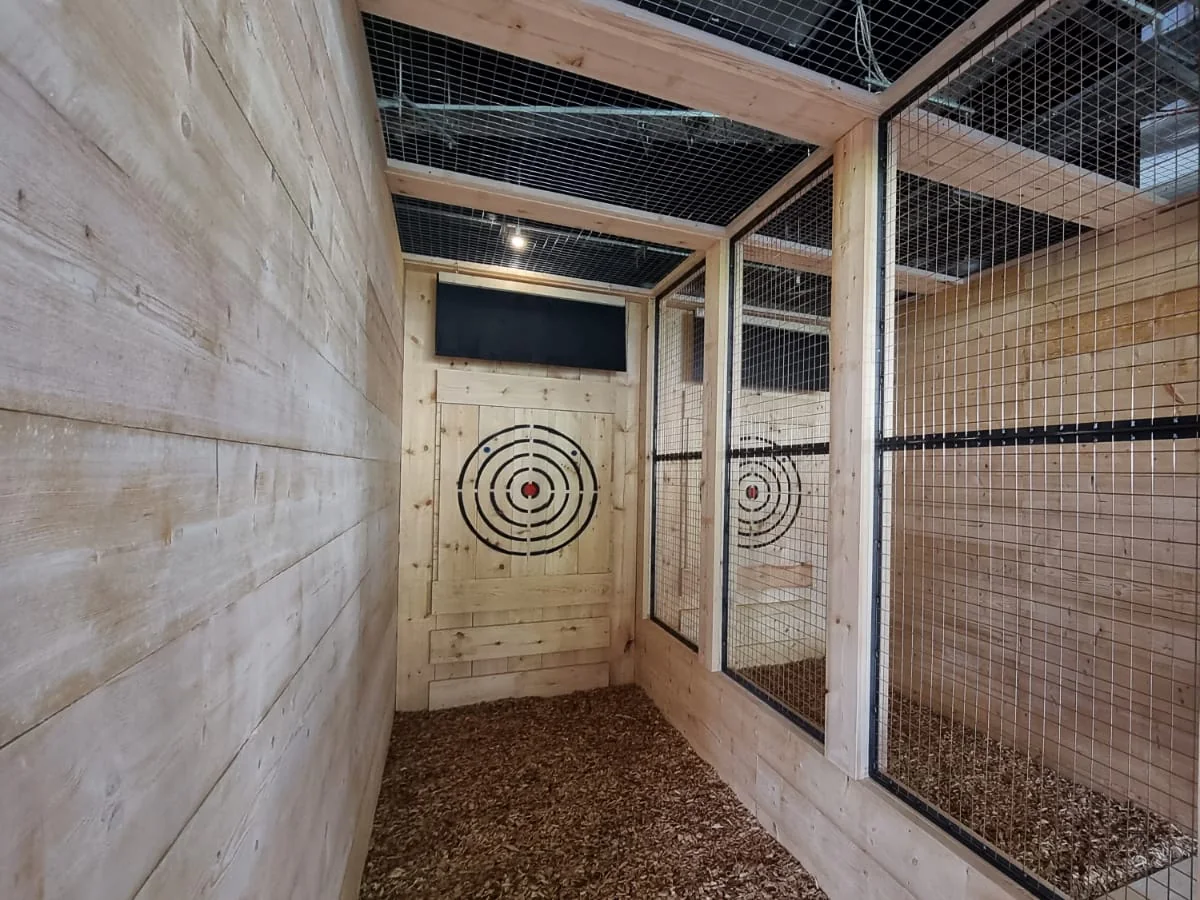
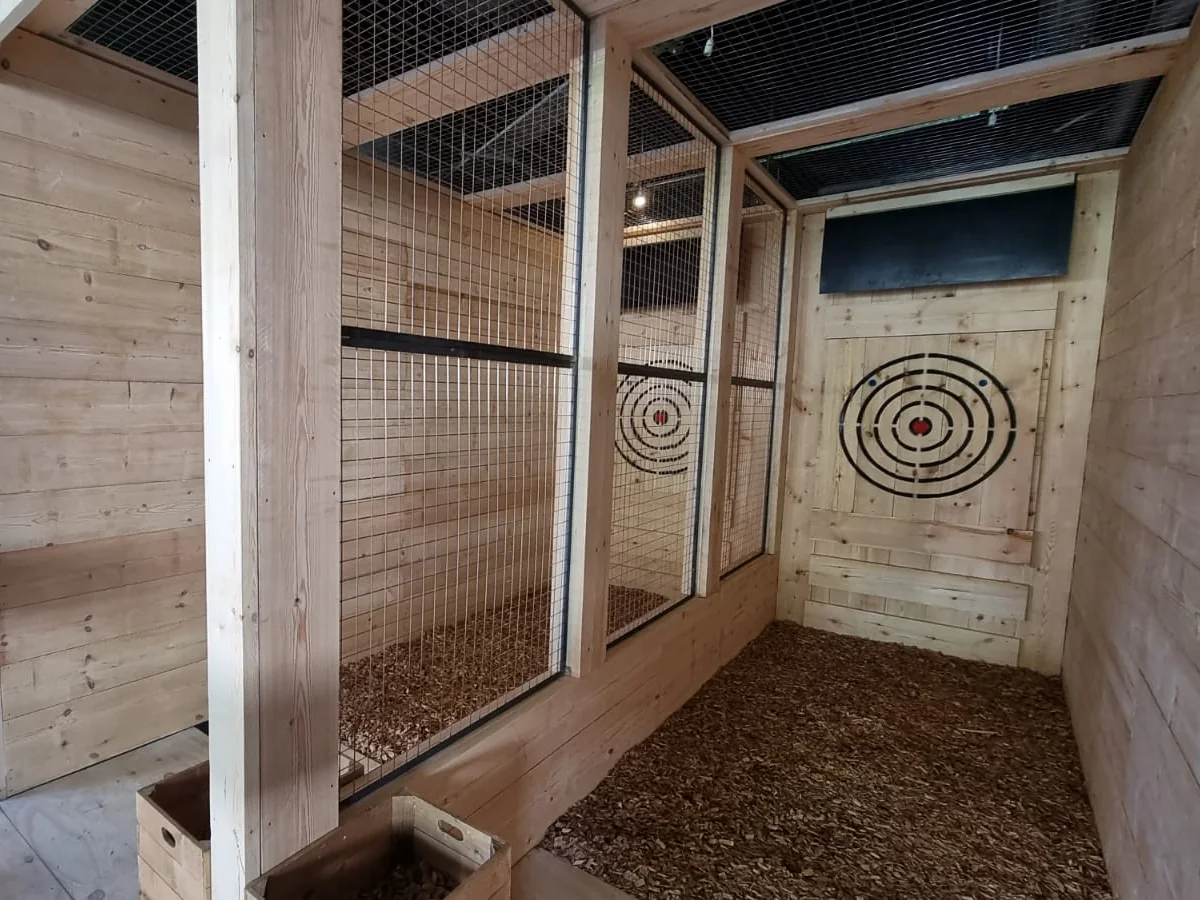
The operator should decide who may handle equipment, where everyone stands, how axes are returned and when play stops. Physical separation between lanes, visible boundaries and a clear customer flow make those rules easier to understand.
Staff should inspect the lane and equipment, provide a briefing, observe the session and intervene early. If a handle, target, fixing or floor condition creates doubt, it should be dealt with before play resumes.
The participant controls their own behaviour
Customers should listen to the full briefing, use only the instructed technique, wait for permission to retrieve an axe and keep behind the defined line when another person is throwing. Closed-toe footwear and unrestricted clothing are common venue requirements, but the venue's own policy is the one to follow.
If you feel unwell, have an injury that may affect the movement or are unsure whether the activity is suitable, speak to the venue before the session and seek professional advice where appropriate.
What happens after an incident or near miss
Play should stop. Staff should make the area safe, follow the venue's first-aid and incident process, inspect the relevant equipment and record what happened. Near misses matter too because they may reveal a weakness in the briefing, lane layout, maintenance routine or customer control.
The clearest answer is therefore not a simple yes or no. Injury is possible, and a credible venue manages that fact through design, supervision, maintenance and consistent participant rules.
Related guides
Good questions. Practical guidance.
Practical reading for planning, choosing and keeping your venue in play.
Agency-proposed policy; client review pending for 27 October 2026. This notice describes the current website configuration and has not yet received client or legal sign-off.
1. Who we are
More Events Ltd, trading as Target Works, is the controller responsible for the personal information described here. We are registered in England and Wales, company number 10513860. Our registered office is Manor Court Chambers, Townsend Drive, Nuneaton, Warwickshire, CV11 6RU.
For privacy questions or to exercise your rights, telephone 01788 228078 or write to Privacy, More Events Ltd, Unit FR1 Langborough Farm, Murcott, Northampton, NN6 7QR. The registered office is a legal address, not an invitation to visit.
2. What this notice covers
This notice covers the Target Works website and enquiries about our target games, equipment, installations and support. It does not cover the independent websites or apps you choose to visit through an external link.
The website is aimed at venue operators, organisations and adults planning activities. Please do not send children's personal details, health information or other sensitive information in a general enquiry.
3. Information we use
The Home and Contact enquiry forms ask for your name, email address and message, with a required acknowledgement that you have read this Privacy Policy. A telephone number and separate permission for product, project and company updates are optional. You may choose to include your organisation, venue or project details in the message. There is no file-upload facility. We also receive information when you telephone, email or write to us, or when someone contacts us on your behalf. Required fields are identified where a sending form is available; without them the form cannot be submitted.
Website delivery and security providers may process an IP address, browser/device information, requested page, referrer and access time. Optional maps and embedded content receive technical information only when their functional-content category is enabled. Cookie identifiers and other online information can be personal data even when they do not identify you by name.
4. Why we use information
Purpose
Lawful basis
Answer general enquiries, assess requirements and manage follow-up.
Our legitimate interests in responding to people who contact us and operating our business.
Prepare a quotation at your request and supply agreed products or services.
Steps requested before a contract, or performance of a contract where you are a party; legitimate interests in managing business relationships where appropriate.
Deliver, maintain and secure the website; diagnose faults and prevent abuse.
Our legitimate interests in providing a reliable service and protecting visitors and systems.
Load interactive maps and optional embedded content.
Your consent, managed through Cookie Settings.
Contact you about Target Works products, projects and updates when you separately request this.
Your consent. You can withdraw this permission at any time.
Maintain records required by law and establish, exercise or defend legal claims.
Legal obligations and our legitimate interests in protecting legal rights.
We consider necessity and the impact on individuals before relying on legitimate interests. You have the right to object to processing based on legitimate interests.
5. Enquiries and Formspree
The enquiry forms on Home and Contact send your name, email address and message to Formspree when you select “Throw”. These three fields and acknowledgement of this Privacy Policy are required. Your telephone number and permission to receive product, project and company updates are optional. Any telephone number and choices you provide are recorded with the enquiry. Please do not include sensitive personal information. Formspree processes the submission for onward delivery to our enquiry inbox and may process technical request information to operate and protect its service.
The first-party form script makes no Formspree request before submission and does not save your entries in cookies or local storage. Without JavaScript, the form submits directly to Formspree and opens its response page, where its own service controls apply. The privacy acknowledgement is not permission for marketing; we use the lawful bases listed above to handle an enquiry.
Making an enquiry is not consent to marketing. The separate updates checkbox starts unchecked; leaving it unchecked does not prevent an enquiry. Where a sending form is available, selecting it records your permission with that enquiry and does not automatically subscribe you to a newsletter. You can withdraw permission by contacting Target Works. The footer newsletter module is a non-sending preview with disabled controls: it does not collect, send or store email addresses. This website does not load Mailchimp. This notice will be updated before newsletter signup is activated.
6. Interactive maps and optional content
Mapbox
Home and Contact offer an interactive Mapbox map. It loads only after you select “Load interactive map” or allow functional content in Cookie Settings. The address and a first-party fallback remain available without it. Mapbox receives information such as your IP address, browser/device details, map requests and service telemetry. We do not request your device's precise location.
You can withdraw functional-content consent through Cookie Settings. See Mapbox's privacy information for its processing and retention arrangements.
Social content and video delivery
Where offered, the LinkedIn updates feed is supplied by Elfsight and loads only after functional-content consent. Elfsight and its content-delivery and security services receive technical information and use the browser technologies listed in our Cookie Policy to display and protect the feed. This is separate from a LinkedIn advertising tag. See Elfsight's privacy policy.
The homepage background video and the site's demonstration videos are delivered directly from this website. Playback uses the same hosting service as the page and does not load a third-party video player or activate analytics or advertising. Independently linked websites and app stores have their own privacy practices.
7. Analytics and advertising
No Google Analytics or LinkedIn Insight advertising tag is active on this website. Analytics and marketing options are shown as inactive in Cookie Settings. Any future tracking requires separate opt-in consent for analytics and marketing, with no tag loading or measurement pings before the relevant choice.
A production tracking configuration, its purpose, identifiers, retention and cookie register must be approved and reflected here before activation. A consent choice does not authorise an unconfigured future tracking service.
8. Who receives information
Depending on how you interact with us, relevant recipients include website hosting, security and technical-support providers; our business email and administrative service providers; the optional content providers identified above when enabled; professional advisers; and authorities where disclosure is required or permitted by law. We do not sell personal information.
Some providers process information outside the UK. Formspree describes processing in the United States and other countries where it operates; Mapbox describes United States processing and international delivery of its service. Elfsight and its downstream service providers describe their processing in the linked privacy information. These provider disclosures do not establish which contractual safeguards apply to this account.
The final hosting, email, form-service and contractual transfer arrangements are part of the pre-publication review for this draft. We have not yet verified the account-specific provider roles, destinations and applicable safeguards. Contact us using the telephone or postal details above for information about the arrangements and any available safeguards relevant to your enquiry. This agency proposal does not claim that a particular transfer agreement has been signed or that final legal approval has been given.
9. How long we keep information
We keep enquiries for as long as necessary to respond and manage meaningful follow-up. Customer and supplier records may be kept longer to fulfil contracts, accounting and legal obligations, or address claims. The purpose, relationship, applicable obligations and need to protect legal rights determine the retention period.
Technical records are kept for operational and security needs, with longer retention only when needed for an incident or legal obligation. Our first-party cookie choice lasts up to six months unless you clear it, change it or a revised consent version requires a new choice. Providers apply their own relevant retention arrangements to technical information they receive.
Client review pending: the operational deletion criteria and periods for the enquiry inbox, Formspree account, hosting logs and backups still need confirmation by the responsible service owners. Browser-storage lifetimes in the Cookie Policy are not enquiry or server-record retention periods.
If you use the footer motion control, we remember that presentation preference in this browser's local storage. It contains only your motion choice, is not sent to us, and remains until you change it or clear the site's browser data. Your device's reduced-motion setting takes priority. If browser storage is unavailable, the control still works for the current page.
10. Your choices and rights
Depending on the circumstances, you can request access, correction, erasure, restriction or a portable copy of your information. You can object to legitimate-interests processing and withdraw consent at any time. Rights are subject to legal conditions; we may need to verify your identity before responding.
Use to withdraw optional website consent. Withdrawal stops future loading of affected services; it does not undo processing that lawfully occurred before withdrawal or automatically erase records held by a provider. You may also remove cookies through your browser.
We do not make decisions based solely on automated website processing that produce legal or similarly significant effects for you.
11. Security, complaints and changes
We use proportionate technical and organisational safeguards. No internet service can guarantee complete security, so take care with the information you send.
Please raise privacy concerns with us using the telephone or postal details above. You also have the right to complain to the Information Commissioner's Office: ico.org.uk/make-a-complaint, telephone 0303 123 1113.
We will update this notice when our services or data use change. The date above identifies the latest version.
Website policy
Cookie Policy
Last updated 26 October 2026
Agency-proposed policy; client review pending for 27 October 2026. This notice describes the current website configuration and has not yet received client or legal sign-off.
1. About cookies
Cookies are small records stored by your browser. Similar technologies include local storage, scripts and pixels. This policy explains the choices on the Target Works website, operated by More Events Ltd. Our Privacy Policy explains the associated use of personal information.
2. Your choices
You can accept available optional services, reject them, or choose categories. Optional categories start off. Rejecting them does not prevent access to product information or contact details. Reopen in the footer at any time to change your choices.
3. Categories
Necessary: remembers your privacy choice and, if you use the footer motion control, your requested presentation preference. This category is always on and does not contain analytics or advertising.
Functional content: enables the interactive Mapbox map and, where offered, the Elfsight LinkedIn feed. Providers receive technical information when their content loads. Static alternatives remain available without consent.
Analytics and marketing: inactive on this website. No GA4 or LinkedIn Insight Tag is loaded, and no consent is recorded for an unconfigured service. Future activation requires a separate configuration and updated notices.
4. Current technologies
This register describes the prepared implementation and retained protected-staging observations. Third-party technology can vary by browser and provider. The exact storage inventory must be verified before publication against the final public-origin configuration; the register is not a completed account or production audit.
Technology / provider
Purpose and category
Duration
targetworks_cookie_consent Target Works, current website hostname
Stores necessary, functional, analytics and marketing choices plus the notice version. Necessary, first-party; no name or contact details are included.
Up to six months; replaced when you change choices or a new version is required.
targetworks_motion_preference Target Works, first-party local storage
Remembers the motion setting you explicitly choose in the footer. Necessary presentation preference; no analytics, advertising or network request.
Until you change the setting or clear this site's browser data. Device reduced-motion settings take priority.
Mapbox GL JS, map APIs, tiles, session requests and service telemetry Mapbox
Provides the interactive map after functional consent. This describes third-party technology, not an invented cookie name.
Requests occur while the map is loaded. Mapbox's published retention arrangements apply to its service data.
mapbox.eventData:* mapbox.eventData.uuid:* mapbox.eventData.uuidTimestamp:* Mapbox SDK local storage on this website's hostname; * represents a variable suffix.
Stores service-event information and identifiers used by the map SDK after functional-content consent. Functional content, not a Target Works analytics or advertising tag.
Local storage has no browser-set expiry. Mapbox may manage individual entry lifetimes. This website removes these entries when you withdraw functional-content consent; clearing the site's browser data also removes them. This does not describe retention of information already received by Mapbox.
Elfsight LinkedIn widget, where offered Elfsight and its content-delivery and security providers
Loads and protects the optional social feed after functional consent. The specific observed storage is listed below.
Service requests while the feed is loaded; browser-storage lifetimes below are separate from provider server retention.
Limits repeat view counting for the optional feed. Functional content.
15 seconds, as documented by Elfsight.
feeds.post-viewed.<widget-id> Elfsight feed; first-party session storage on this website. The suffix identifies the widget.
Observed feed-related viewed-post record. Functional content; the precise vendor-purpose description remains subject to confirmation.
Browser tab session; can remain after reload or consent withdrawal. Browser session restoration may preserve it.
_cfuvid Cloudflare security used by Elfsight; .elfsight.com
Helps rate limiting distinguish visitors sharing an IP address. Loaded as part of the consented functional feed, not an independently enabled whole-site service.
Session cookie in the retained observations; browser session restoration may preserve it.
__cf_bm Cloudflare security used by Elfsight; .static.elfsight.com and .universe-static.elfsightcdn.com
Helps protect optional feed resources against automated traffic. Loaded as part of the consented functional feed.
30 minutes of inactivity, as documented by Cloudflare.
The Cloudflare entries are downstream of the optional feed, not a separate Cloudflare deployment across the Target Works website. See Elfsight's cookie guidance and Cloudflare's cookie documentation for their published explanations and durations.
The earlier targetworks_optional_consent preference is superseded and is cleared when you make a new choice. An earlier blanket acceptance is not reused for new categories.
5. Maps, video and forms
Choosing “Load interactive map” enables functional content without accepting analytics or marketing. It can also permit the social feed on pages where that feed is present. You can turn it off again in Cookie Settings. Read Mapbox's privacy information and Elfsight's privacy policy for provider details.
The homepage background video and demonstration videos are hosted on this website and do not activate analytics or advertising. Formspree receives enquiry data only when you submit the Home or Contact form using “Throw”. Our first-party form script does not store your entries in cookies or local storage and makes no Formspree request before submission. Without JavaScript, submission opens Formspree’s response page, where its own service controls apply. The optional phone number and updates choice are recorded with the enquiry; the required privacy acknowledgement is not marketing consent. Selecting updates does not automatically subscribe you to a newsletter.
6. Withdrawing consent
Save a changed choice or select “Reject optional” in Cookie Settings. The site saves the refusal before reloading when an optional service has already run. It clears Mapbox-prefixed local and session storage. The next page load does not start refused optional providers; reloading ends the old document and its running map or feed.
The feed-related first-party session record can remain for the tab session. We cannot directly erase cookies held on another provider's domain or reverse information already sent with consent. Provider cookies may remain until expiry or until you clear them through browser controls. Retained storage does not itself mean an optional provider has restarted. Your browser's site-data controls provide an additional way to clear or block those records; blocking all storage may stop this site remembering your privacy or motion preference.
7. Updates and contact
We will revise this policy when technologies change and request a fresh choice where needed. For questions, call 01788 228078 or write to Privacy, More Events Ltd, Unit FR1 Langborough Farm, Murcott, Northampton, NN6 7QR.
Your privacy
Cookie Settings
Choose which optional services you allow. Necessary storage remembers your choice; everything else starts off. You can change your mind at any time.